



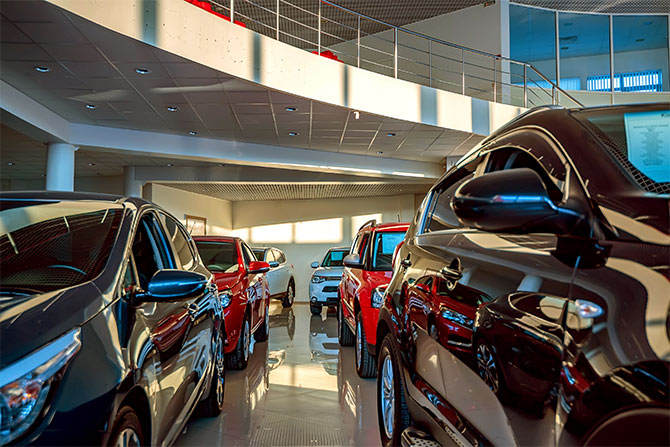

2025 turned out to be a solid year for auto retailers, with profitability steady even as Q1’s strong sales softened over the balance of the year. 2026 looks to be more of the same, supported by an uptick in overall economic growth predicted for the year. Vehicle affordability is a risk dealers will be watching throughout the year.
According to Mike Skordeles, head of U.S. economics at Truist Advisory Services Inc., “The overall economy has been muddling through 2025, but we see indications for an uptick in growth fueled by four big factors: changes to tax policy, marginally lower borrowing costs, and more stability on the trade policy and tariff front, along with continued investment in AI and technology spending.”
Mark Strand, deputy chief economist at Cox Automotive Inc., elaborated, “2026 may look a lot like 2025, but with lower credit delinquencies and improving credit scores. I’m predicting moderate growth fueled by stimulative provisions from the One Big Beautiful Bill (OBBB) and AI buildout. Targeted tax relief and larger tax refunds should take some pressure off lower and middle-income households and reduce credit strain. Some re-shoring of investment would boost employment. But if inflation remains elevated and an obstacle for lower and middle-income consumers looking to make a vehicle purchase, then the top-earning households may not have enough spending to overcome the drag and lift the economy.”
“Along with the federal fiscal situation, I’m watching the bond market.” Strand continued. “There’s a voracious global demand for capital — for AI, robotics, European rearmament and fiscal deficits — that’s keeping long-term rates elevated. Despite the Federal Reserve (Fed) rate cuts, longer-term mortgage and auto loan rates haven’t fallen as much as the Fed would like, and we still haven’t seen all the tariff pass-through. If inflation accelerates, that could force the Fed to pause or reverse rate cuts and create headwinds for vehicle affordability.”
It’s a Bifurcated, Two-Speed Economy
“We have near record-low consumer sentiment at a time when GDP is growing, and equities are at an all-time high. That tells us the benefits are not being distributed evenly. It’s a bifurcated consumer market, and there is real stress on lower and middle-income households,” says Strand. Skordeles added, “It’s often labeled as a K-shaped economy, but that doesn’t accurately describe the dynamic we’re seeing. K-shape suggests that spending is going down for a segment of consumers — that’s not what we are seeing.”
Skordeles continued, “I’ve been describing the economy as ‘two-speed.’ At the top end, spending is robust; these consumers are buying, especially autos. For median earners and below, spending is still happening, but shoppers are being more selective. Value is paramount, and they’re more deliberate about their purchases.” Strand added, “Consumers aren’t happy about what they’re getting for their money, whether that’s at the grocery store or the auto dealer. Want-to-be home buyers feel prices are out of reach. Current homeowners are pressured by rising insurance, utilities and upkeep costs. All those factors are driving consumer sentiment south.”
Expect a Smaller, More Profitable Automotive Market
“Wages are once again growing faster than inflation,” Skordeles said, “which supports real incomes and should help consumers as we move through 2026.” Still, the total cost of vehicle ownership — vehicle prices and loan payments, along with insurance and maintenance costs — has outrun wages over the cycle.
The result is a smaller new market than we saw before the pandemic. Strand expanded, “The auto market is driven by $100K+ households. Everything has changed for consumers earning below that, including subprime buyers. Compared to 2019, we’ve lost roughly 10% of the buying pool due to credit issues, access and affordability. We see elevated delinquencies and repossessions concentrated in subprime, though not at 2008-2009 crisis levels. Many are reprioritizing and may choose to stay in an older vehicle versus buying a newer one, which contributes to the gap.”
For the dealer, the smaller new car market hasn’t diminished returns. “Overall profitability is almost two times what it was pre-pandemic,” Strand explained. “Dealers are finding revenue from parts, from the service lane and from selling F&I. As consumers have adjusted to the idea that they get less for their money and are staying in older vehicles with higher mileage, they’re buying the tire plan, extended warranties and some insurance add-ons. The dealer wins on all of those.”
Disciplined, Tech-Savvy Dealers Can Expect Another Strong Year
Jason W. Smith, head of Truist Dealer Commercial Services, states, “In the capital-intensive auto retail sector, lower short-term interest rates should reduce floor plan interest expenses, enhance cash flow and earnings, and ultimately benefit organizations financing commercial real estate projects and franchise acquisitions through debt.”
“Broadly speaking, dealers who learned from the pandemic are better off,” says Smith. “Dealers that have systematically applied operational improvement lessons and embedded efficiency into their organizational DNA are outperforming peers.”
During the pandemic, buyers demanded enhancements to the digital buying experience, and auto retailers offered them. Skordeles said, “Digital buying forced familiarity with technology, tools, apps and CRM systems that allowed dealers to hold less inventory and generate more cash flow. Dealer operations have become far more sophisticated and are being operated with greater discipline.”
Strand added, “The latest inventory optimization and management software lets dealers take a more scientific approach. Retailers can easily track what they’re holding onto and better manage acquisitions, pricing and margins.”
OEMs’ Approach to the Market
Strand believes that new car production levels will remain flat in the short term. “Without greater vehicle affordability, it’s hard to see production returning to levels we saw pre-pandemic.” Skordeles added that tariff pressures and the risk of supply chain disruption will be part- and OEM-specific. “The supply chain is massively complex. OEMs aren’t going to figure out how to build cheaper cars or de-contented trim levels by mid next year,” noted Strand.
“Incentives have been running 7.5-8% of average transaction prices,” continued Strand. “The ‘air gap’ in sales in the fall has created some slack — very brand specific — with needed incentives to move product. Some OEMs have been eating tariffs and would like to pull back discounts to protect margins. Raising prices will attract the wrong kind of attention. Throttling incentives may be the least bad answer.”
Competing for Supply in a Tight Used Car Market
“New cars are the used car ‘factory.’ It takes three to four years for a lease to work its way into the used vehicle supply,” said Strand. “Today, one in four new vehicles is leased, whereas pre-pandemic, it was one in three. Fewer leases contribute to the tight supply market for used and Certified Pre-Owned (CPO) cars.”
Strand added, “We are fundamentally limited on the supply of used vehicles, about 8 to 9 million units short in the 5-year-old and less segment. We are nowhere near generating enough used car supply to move the market. That means used car values and prices should hold stable for the foreseeable future, and that should make room for more leasing, maybe on shorter terms.”
Competition is fierce for the cream of the used car crop. Per Strand, “Players like CarMax and Carvana are aggressively sourcing vehicles directly from consumers. And traditional dealers have also gotten into the game of direct purchase. Smaller and mid-sized dealers may find themselves short on inventory and in a tough spot competitively.”
Strand continued, “The customer experience is more important than ever. Develop loyalty by maintaining strong customer relationships with a lifetime-value mindset. Do it in the service lane. With vehicles in short supply, you might want to resell that car in the future, so you want them to come back. Emphasize delivering a great customer experience at every touchpoint, with transparency and responsiveness. You don’t want them leaving your dealership feeling unappreciated or neglected and wanting to sell their car to someone else.”
Finding Their Footing in the EV Market
Expect 2026 to be a reset year with many, but not all, automotive manufacturers pulling back from EV investments. Producers are still trying to figure out how to absorb tariffs and rebuild more resilient supply chains while profitably building vehicles. With so many buyers priced out of the EV market, manufacturers must determine what kind of product they can build to bring back entry-level buyers.
Strand predicts, “The big story for 2026 will be around used EVs. Under the tax credit scheme, only leases really made sense. As those leases are returned, we expect a few million EVs to hit the market over the next three years. We’re not sure what values will look like, but these cars may be affordable enough to entice some reticent buyers off the sidelines. These returns would create a new opportunity for millions of EV-wary buyers to set aside their apprehensions and experience driving an EV at a very attractive price.”
Without tax subsidies, EV adoption will be an uphill climb for the foreseeable future. EV and even plug-in hybrid production are being de-emphasized. Full-size EV pickups have largely failed in real-world use cases due to range, charging access and the challenges of rural operation. The center of gravity is shifting back towards traditional hybrids as a bridge technology. For now, internal combustion engines will remain the king of the road, in part because they are generally cheaper to build, and affordability is key.
Truist Bank, Member FDIC. ©2026 Truist Financial Corporation. Truist, the Truist logo, Truist Purple, Truist One, Truist Marquee, LightStream and the LightStream logo are service marks of Truist Financial Corporation. Equal Housing Lender.
Comments regarding tax implications are informational only. Truist and its representatives do not provide tax or legal advice. You should consult your individual tax or legal professional before taking any action that may have tax or legal consequences.